





Enlighten me?
Info for the other studies will be in their own individual posts to this thread.
robysue wrote:I'm a newbie here. I apologize in advance for the length of my posting about my sleep studies.
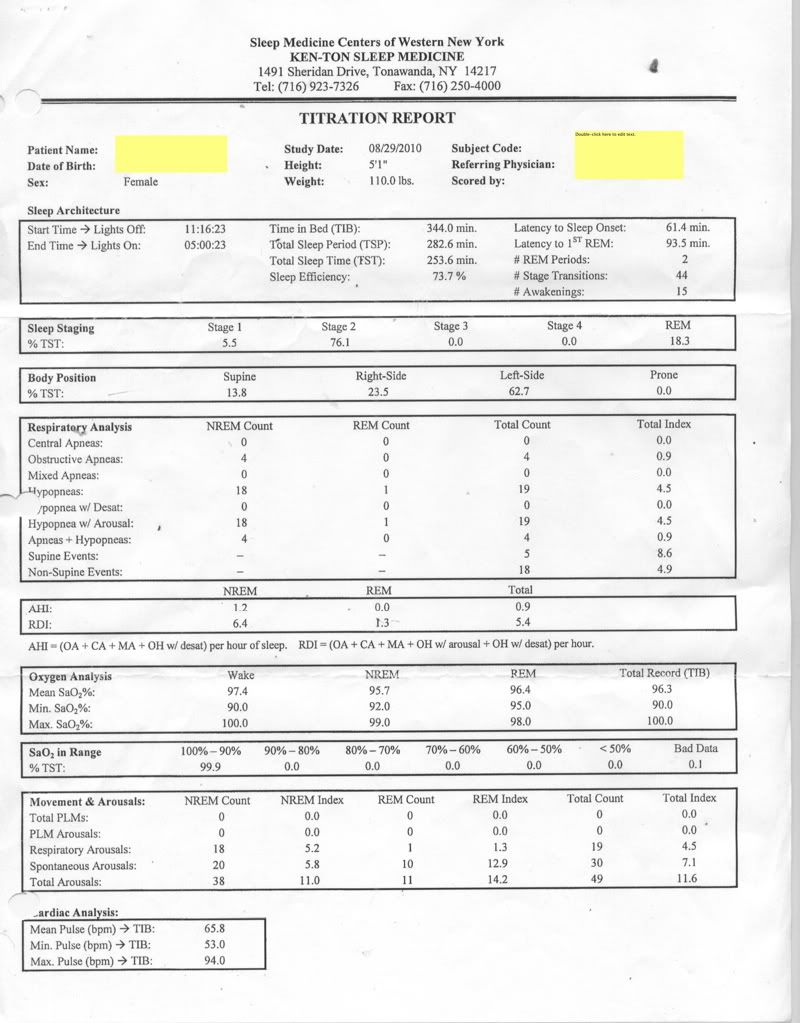
I've now had two sleep studies done, one baseline and one with titration. After a brief tussle with my sleep doctor's office, I've now got copies of the reports, but not the full studies. Having been reading a lot about sleep apnea both here and elsewhere, I'm pretty sure I understand most of the things on the report, but I am confused by a few things under the Respiratory Analysis and Movement & Arousals sections of the summarized data.
So here's the brief version of the original study without CPAP:
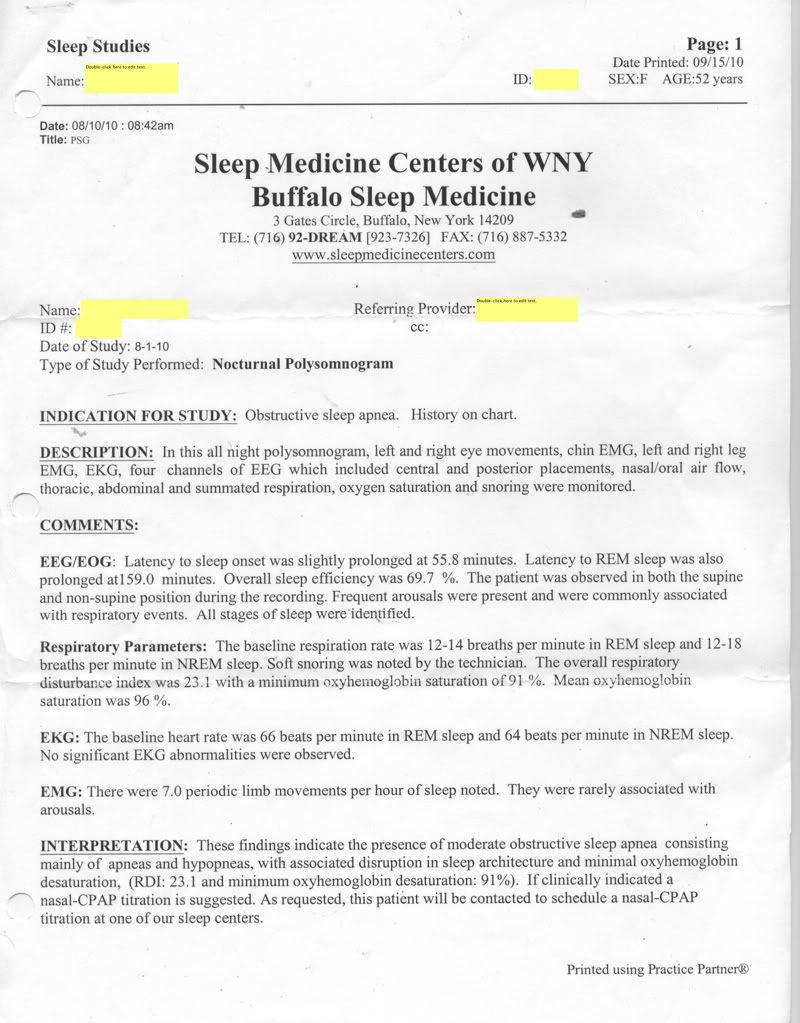
EEG/EOG
Latency to sleep onset was slightly prolonged at 55.8 minutes.
Latency to REM sleep was prolonged at 159.0 minutes.
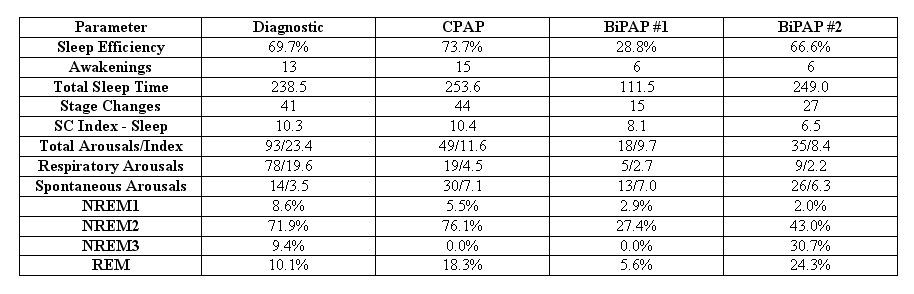
Overall sleep efficiency was 69.7%
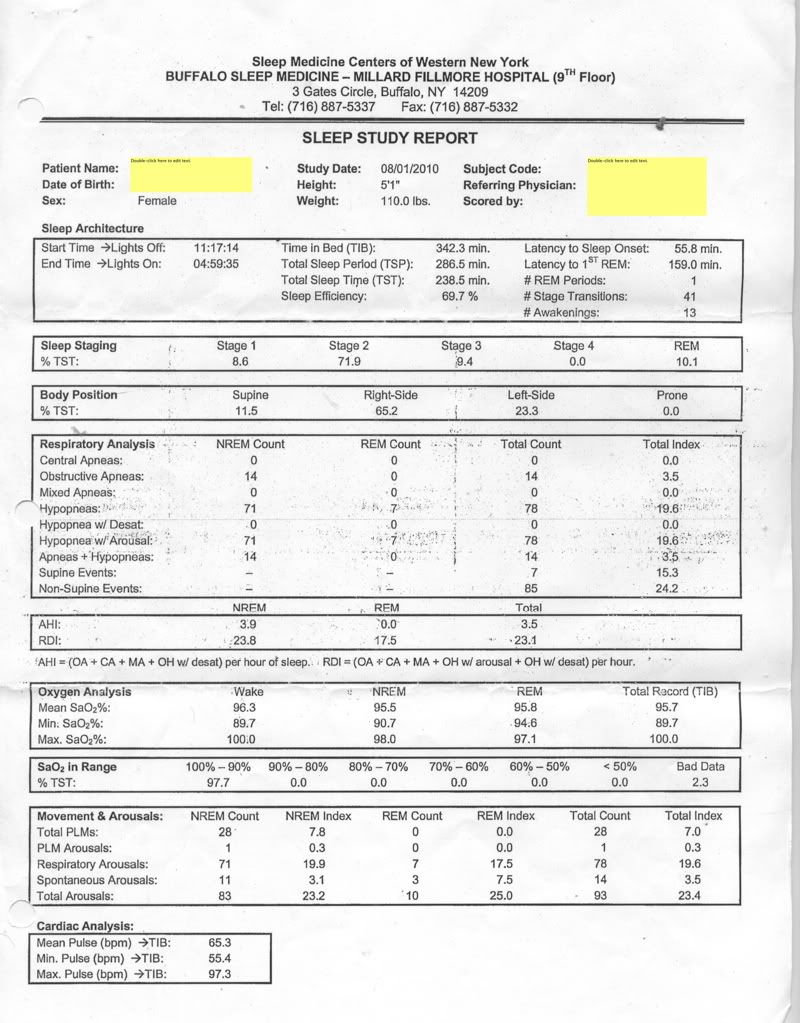
# REM Periods: 1
#Stage Transistions: 41
#Awakenings: 13
Total sleep time in Stage1: 8.6%
Total sleep time in Stage2: 71.9%
Total sleep time in Stage3: 9.4%
Total sleep time in REM: 10.1%
Patient was observed in both supine and non-supine positions.
Frequent arousals were present and were commonly associate with respitory events.
All stages of sleep were identified.
Repiratory Parameters:
Baseline respiration rate was 12-14 breaths per minute in REM and 12-18 breaths per minute in NREM sleep.
Soft snoring noted by technician.
Overall respiratory disturbance index was 23.1 with a minimum oxyhemoglobin saturation of 91%.
Mean oxyhemoglobin saturation was 96%
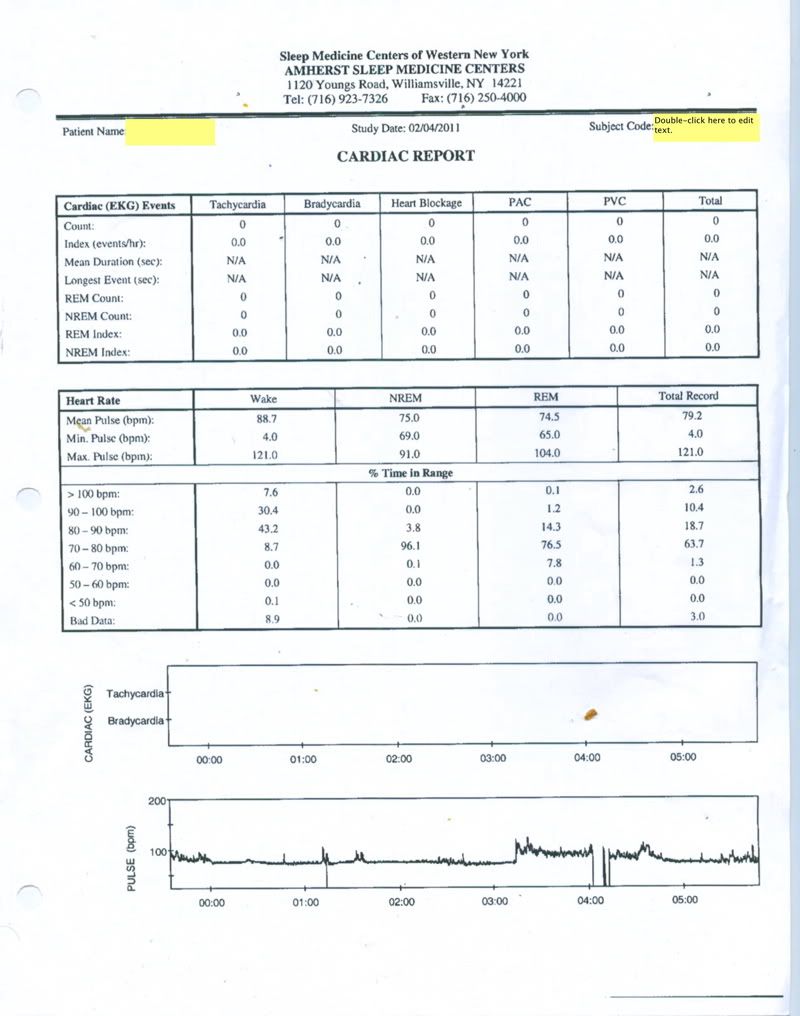
EKG:
Baseline heart reate was 66 beats per minute in REM and 64 beats per minute in NREM sleep.
No significant EKG abnormalities were observed.
Mean Pulse (beats per minute) for total time in bed: 65.3
Min. Pulse (beats per minute) for total time in bed: 55.4
Max Pulse (beats per minute) for total time in bed: 97.3
EMG:
7.0 periodic limb movements per hour of sleep noted. They were rarely associated with arousals.
Interpretation:
These findings indicate the presence of moderate obstructive sleep apnea consisting mainly of apneas and hypopneas, with associated disruption in sleep architecture and minimal oxyhemoglobin desaturation. (RDI: 23.1 and minimum oxyhemoglobin desaturation: 91%).
Additional Data of Respiratory Analysis
There's a table that looks like this:Additional Data on Movements & Arousals:Code: Select all
Type                       NREM count     REM count     Total Count     Total Index
Central Apneas:               0               0             0              0.0
Obstructive Apneas:          14               0            14              3.5
Mixed Apneas:                 0               0             0              0.0
Hypopneas:                   71               7            78             19.6
Hypopneas w/ Desat:           0               0             0              0.0
Hypopneas w/ Arousal:        71               7            78             19.6
Apneas + Hypopneas:          14               0            14              3.5
Supine Events:                -               -             7             15.3
Nonsupine Events:            -                -            85             24.2

AHI = (OA + CA + MA + OH w/desat) per hour of sleep:
AHI NREM:  3.9
AHI REM:   0.0
AHI total: 3.5

RDI = (OA + CA + MA + OH w/arousal + OH w/desat) per hour of sleep:
RDI NREM:  23.8
RDI REM:   17.5
RDI total: 23.1
This is in a table that looks like this:So here are my questions:Code: Select all
type                      NREM count   NREM index     REM count     REM index    Total count    Total index
Total PLMs:                 28             7.8             0           0.0           28            7.0
PLM Arousals:                1             0.3             0           0.0            1            0.3
Respiratory Arousals:       71            19.9             7          17.5           78           19.6
Spontaneous Arousals:       11             3.1             3           7.5           14            3.5
Total Arousals:             83            23.2            10          25.0           93           23.4
1) I'm real confused about why the Hypopneas with arousal don't seem to be counted in the AHI. They're clearly counted in the RDI. Any ideas or comments on why they're not counted in my AHI?
2) What's a Spontaneous Arousal? Do they show up in the AHI? the RDI?
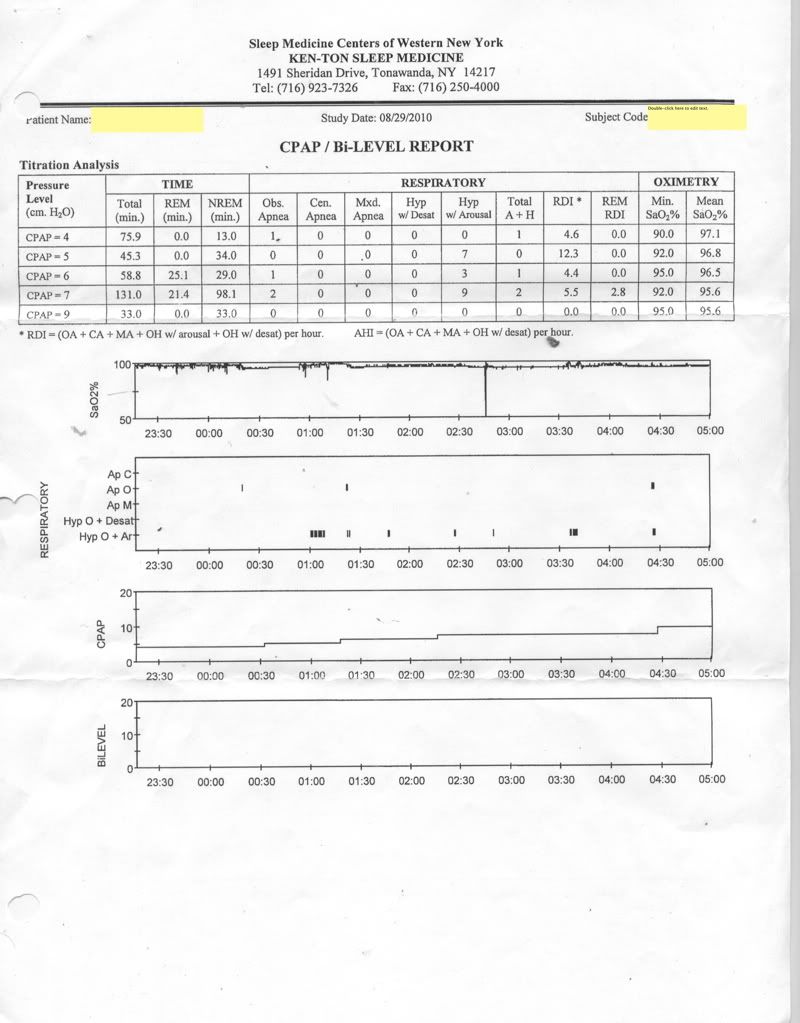
Sleep study done with CPAP titration results
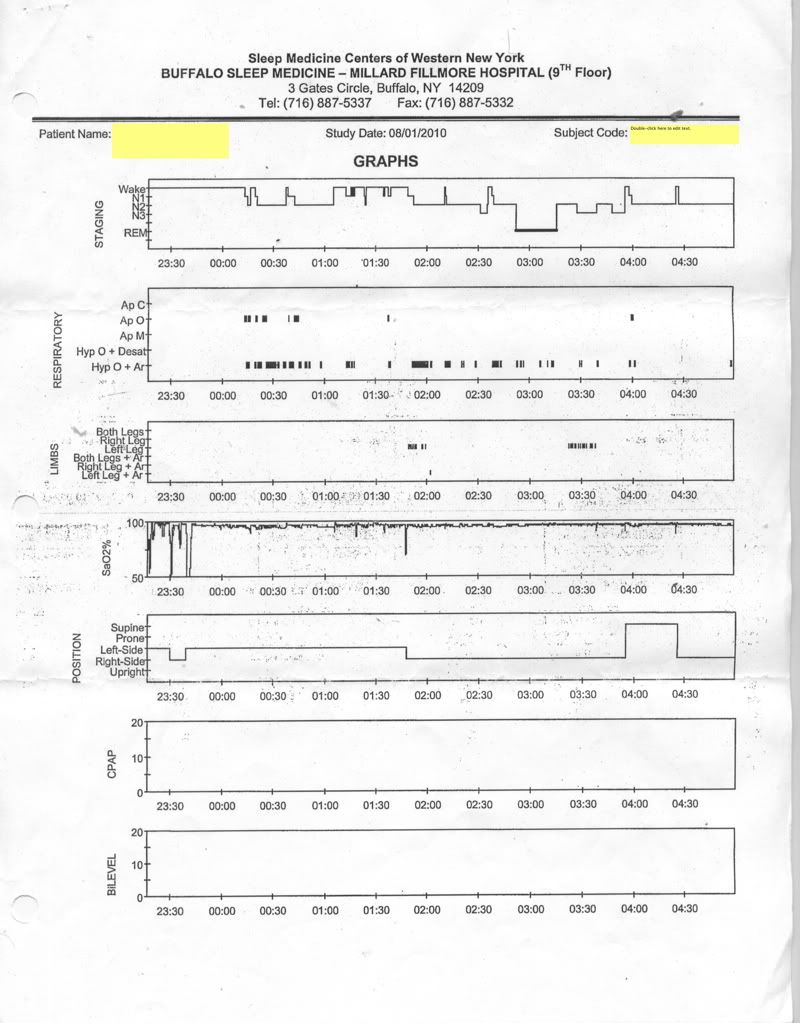
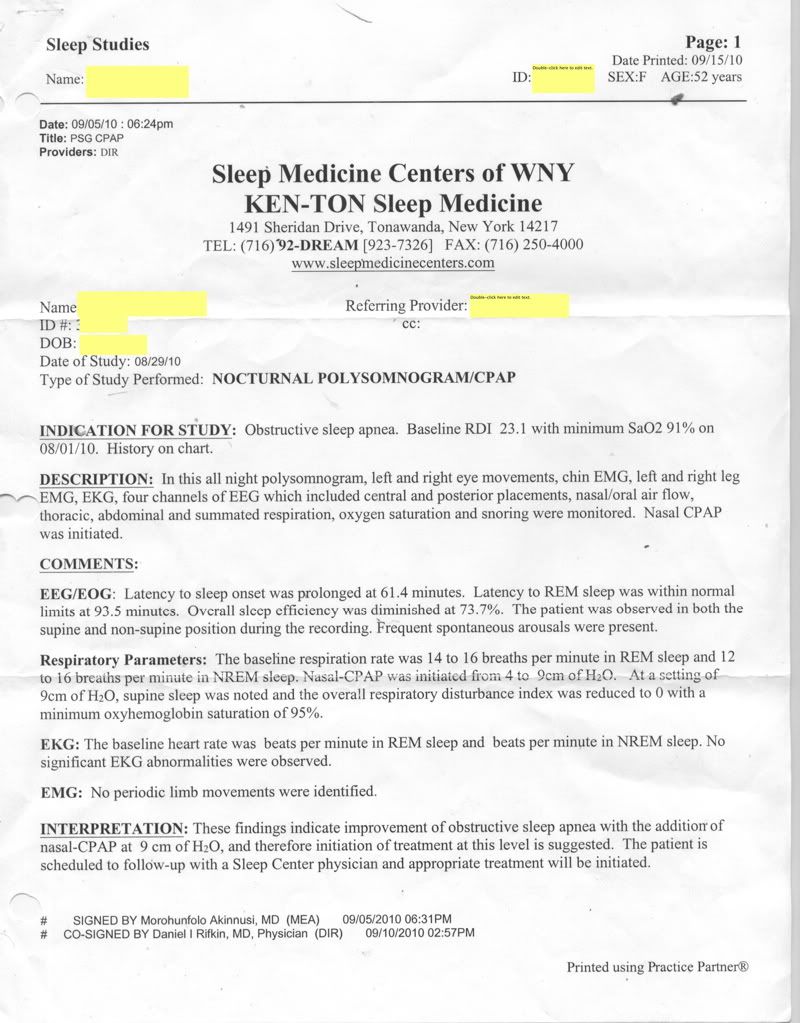
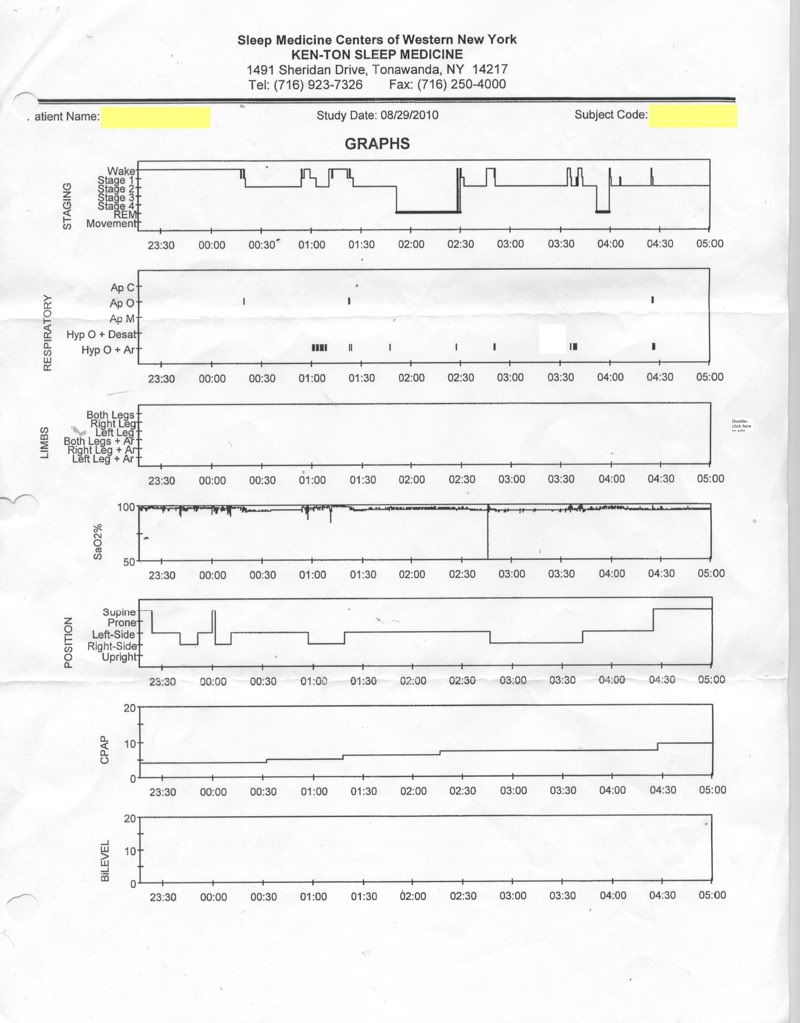
On the sleep study with the CPAP titration, the sleep doctor's report indicates that once the pressure was set at 9cm of H20, "supine sleep was noted and the overall respiratory disturbace index (RDI) was reduced to 0 with a minimum oxyhemoglobin saturation of 95%" The chart showing sleep position also shows that this is the FIRST time that night that I'm asleep on my back. I don't like sleeping on my back because it makes my lower back hurt. Total time at 9cm was only 30 minutes and included no REM. Should I be concerned about this at all?
Also on the titration sleep study, the EEG/EOG notes say: "Latency to sleep onset was prolonged at 61.4 minutes. Latency to 1st REM sleep was within normal limits at 93.5 minutes. Overall sleep efficeincey was diminished at 73.7%. The patient was observed in boht the supine and non-supine position. Frequent spontaneous arousals were present." The sleep report also says:
# REM periods: 2
# Stage Transistions: 44
# Awakenings: 15
Total sleep time in Stage1: 5.5%
Total sleep time in Stage2: 76.1%
Total sleep time in Stage3: 0.0% [That's not a typo--it really says zero.]
Total sleep time in REM: 18.3%
All the numbers listed in the Respiratory Analysis section went down. Total PLMs and PLM arousals were 0. But the Spontaneous Arousals went way up:So what does this mean? Is it unusual to have NO Stage 3 sleep during a sleep study? And why would my spontaneous arousals go up so much during the titration study? Could it simply be that the wires (and the mask) were bothering me more during the CPAP study? [Maybe because my breathing was bothering me less?] I do remember waking up several times that night with a super itchy nose and feeling like I needed to seriously rearrange the bedcovers too.Code: Select all
Total Arousals     without CPAP     with CPAP
NREM count:              11            20
NREM index:              3.1            5.8
REM count:               3             10
REM index:               7.5           12.9
Total count:             14            30
Total index:             3.5           7.1
At any rate, I do have a second appointment with the sleep doctor scheduled in a couple of weeks. I'm hoping to have a CPAP at home by then, but I'm running into problems with my insurance/HMO/PPO not wanting to pay for a full data CPAP machine and I don't want to accept a basic level machine that only tracks compliance since I really think I need to be able to see that the CPAP machine is working on a regular basis in order to help me with compliance. At any rate, at that meeting with the sleep doctor, what kinds of things should I be insisting on having explained to me about either of the sleep studies?
Thanks in advance for any help you can give me.
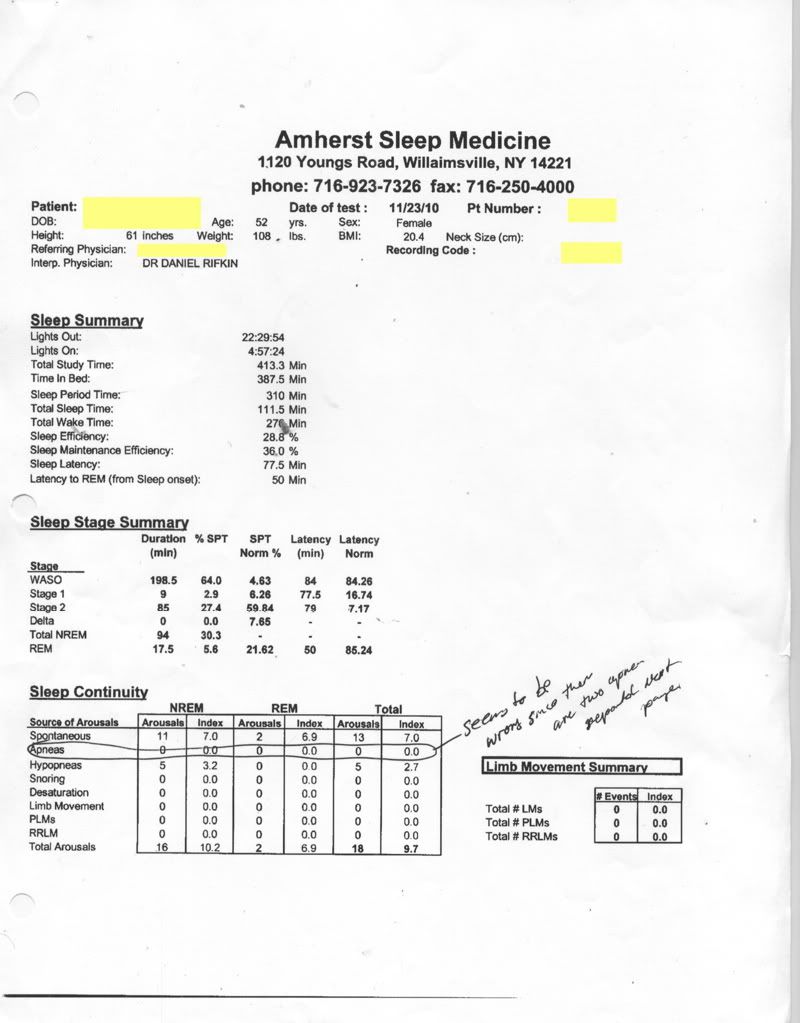
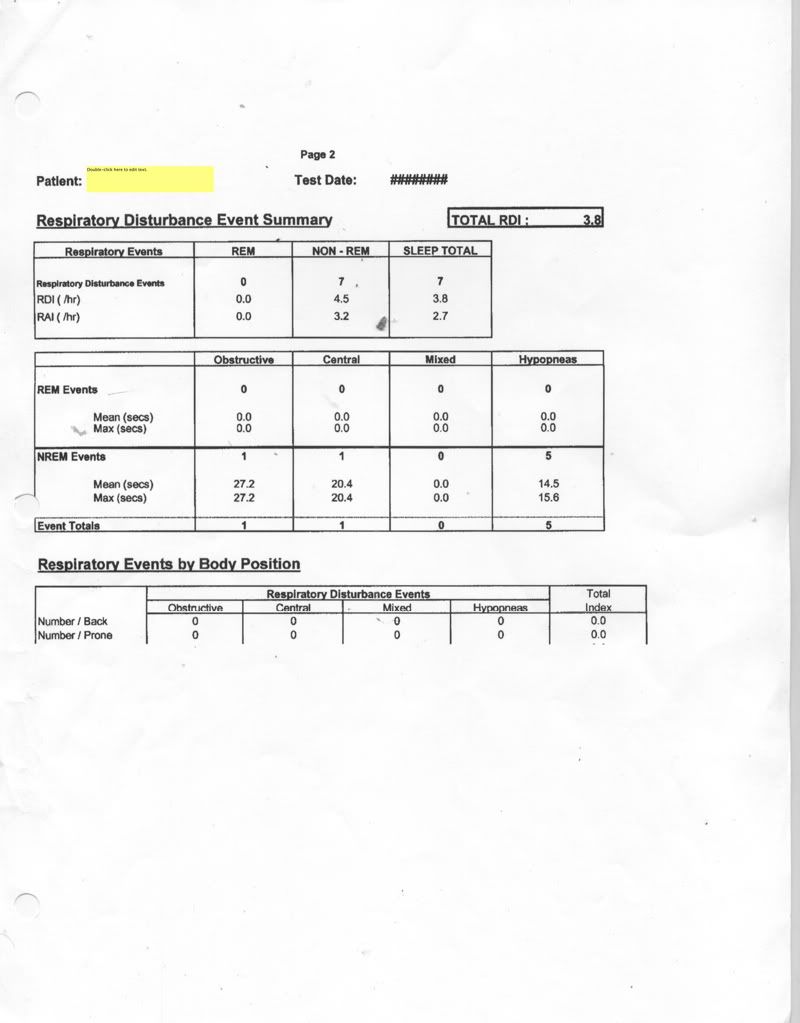
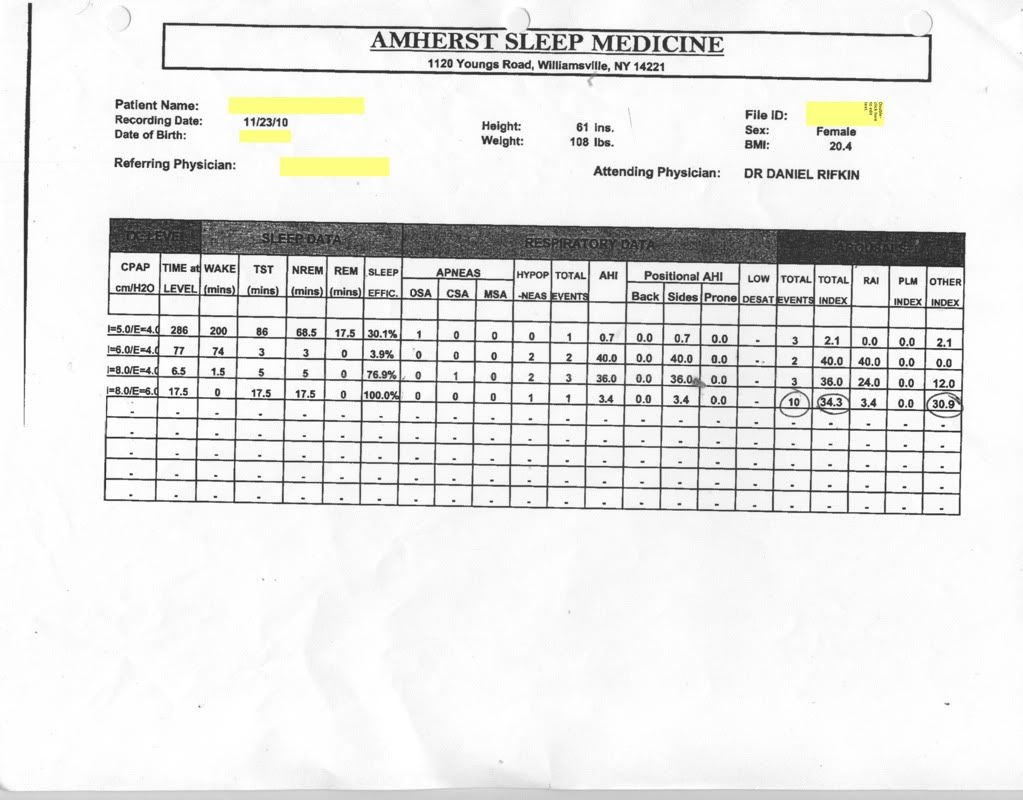
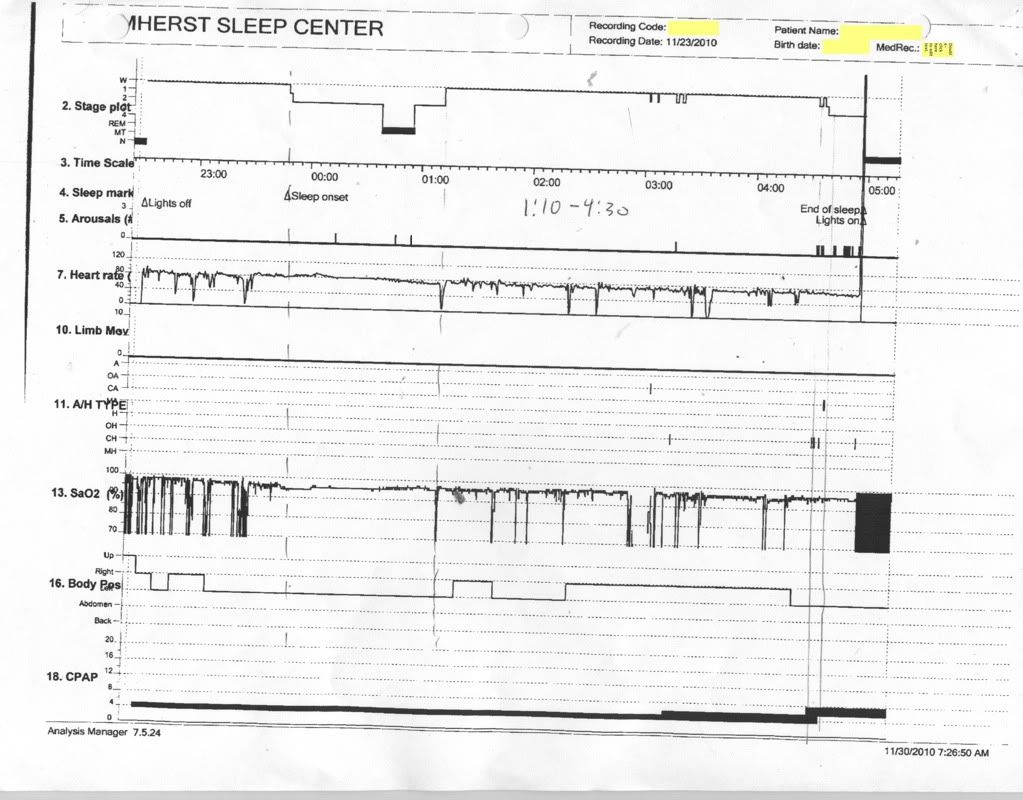
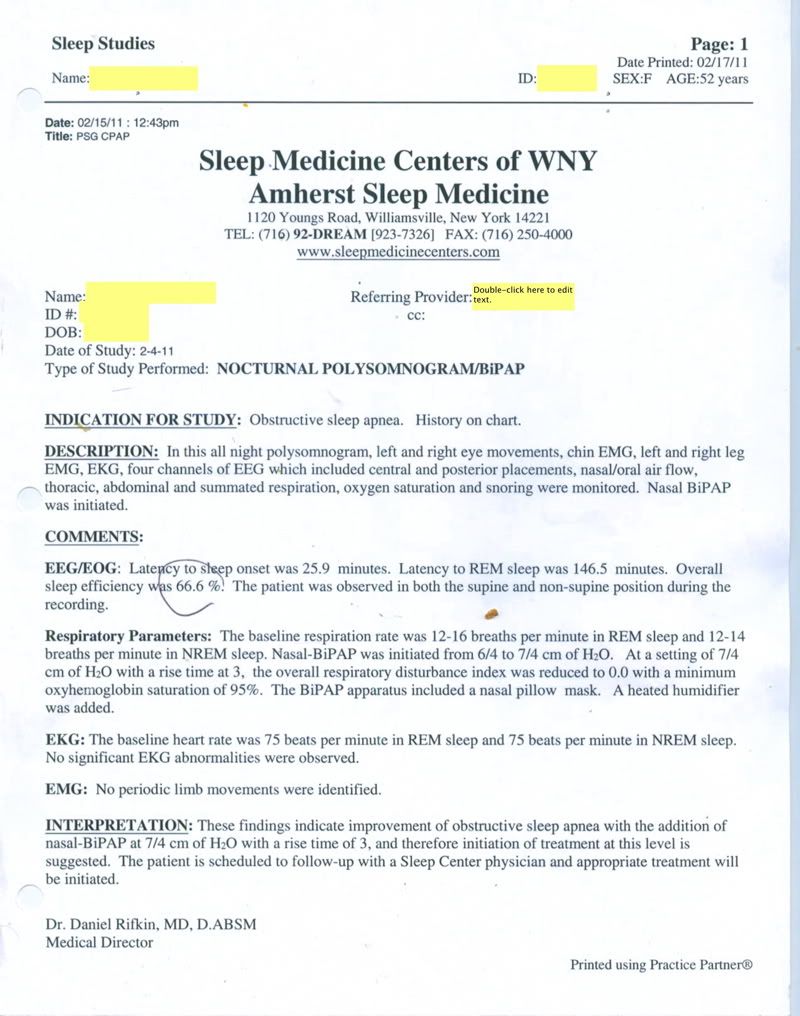
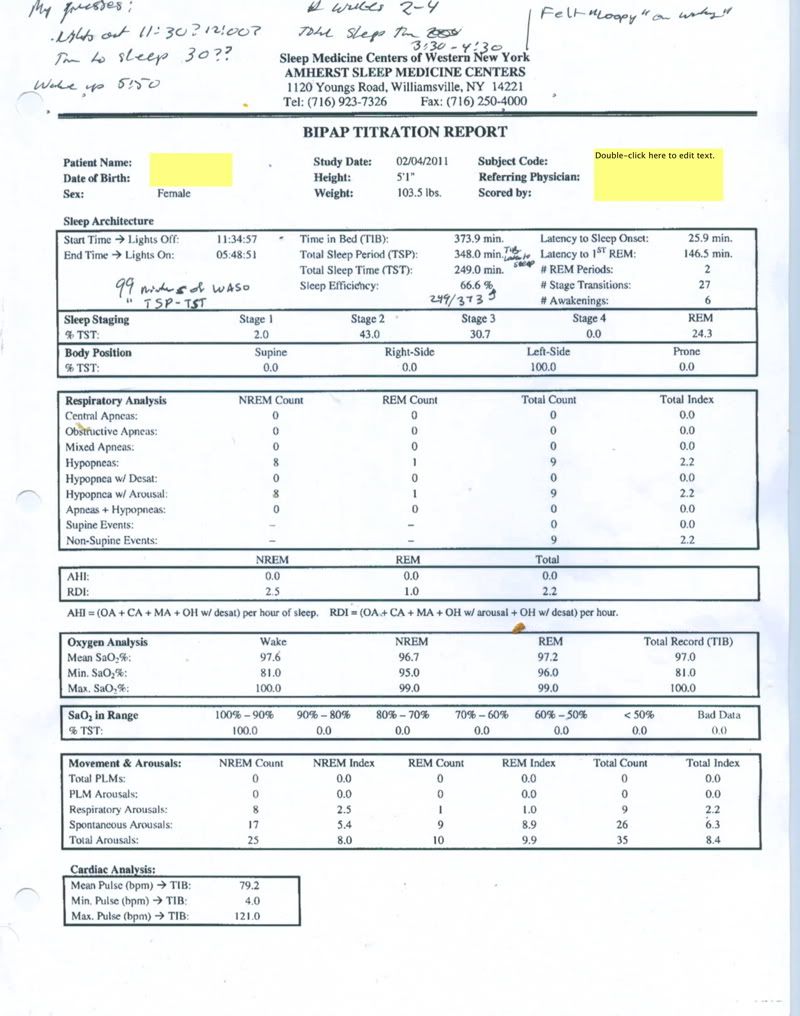
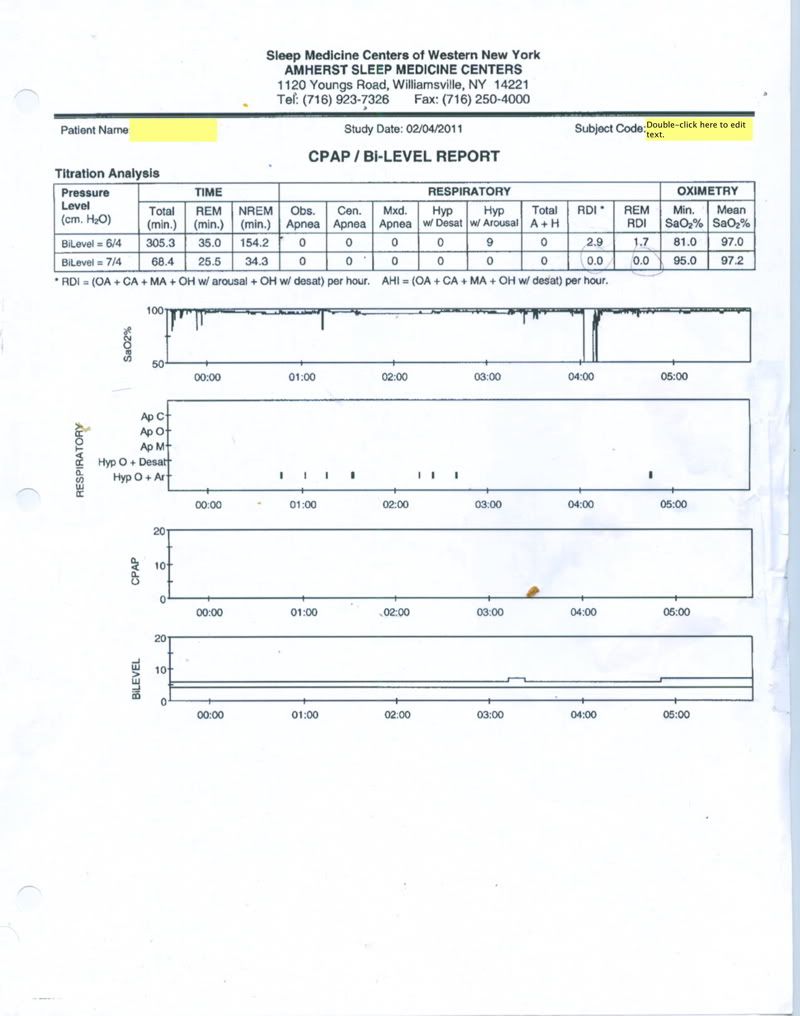
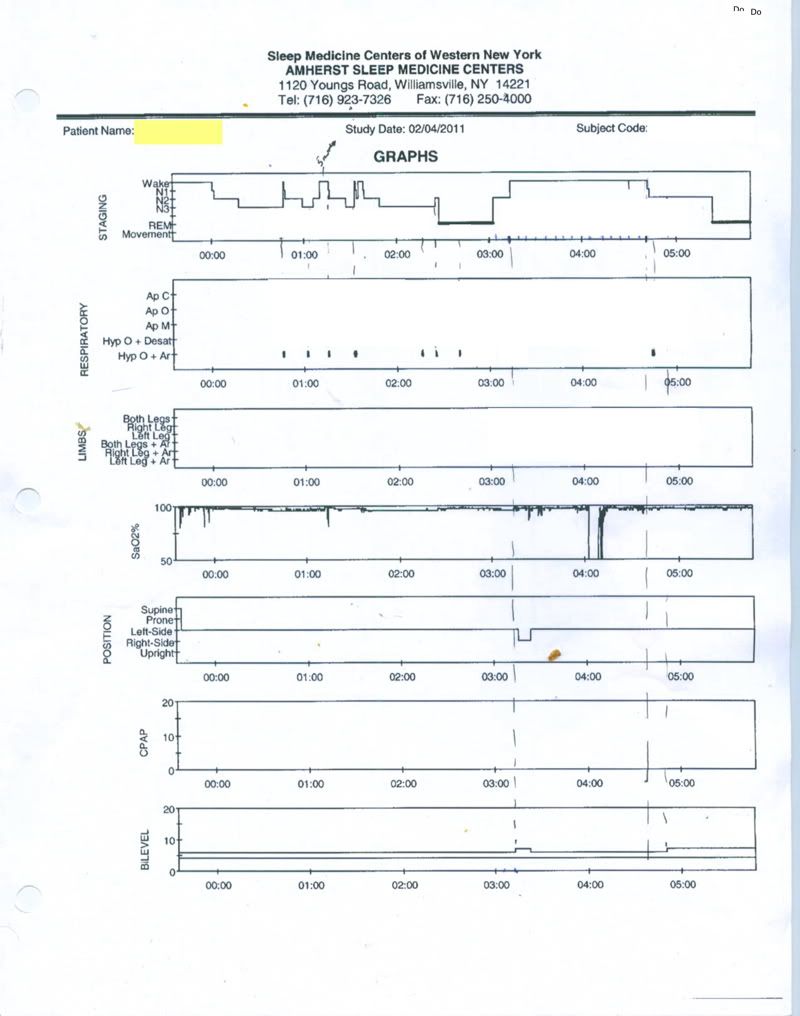
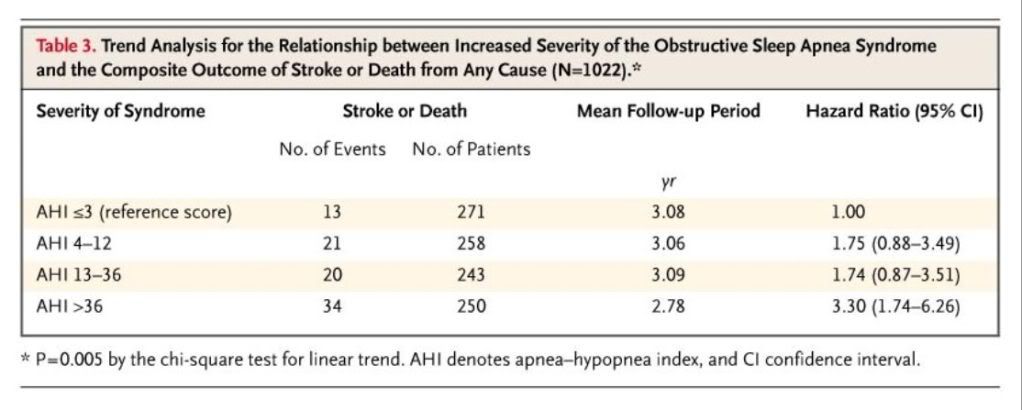
but let's hold on that for a while.)Many patients with the obstructive sleep apnea syndrome received some type of treatment for sleep apnea after the initial evaluation. Thirty-one percent achieved a weight reduction of 10 percent or more; 58 percent were using airway pressurization for at least four hours per night for five nights or more per week; 15 percent underwent upper-airway surgery.
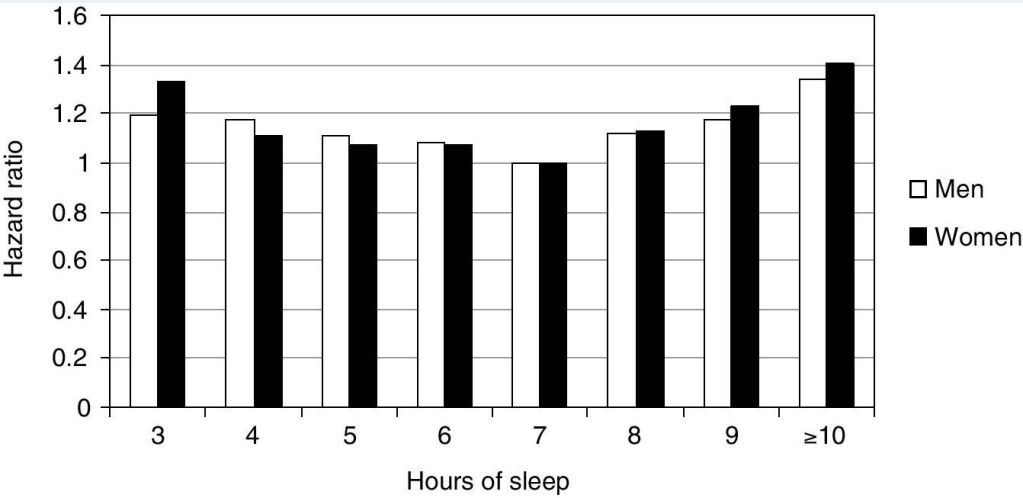
Well that is the $64,000 question, isn't it?NotMuffy wrote:OK, I have a question (or two):
What exactly do you hope to accomplish?
Do you think AHI 0.0 will accomplish that goal(s)?
- Live longer
- Sleep better
- Feel better
Truth be told, I don't think an AHI = 0.0 would accomplish anything.NotMuffy wrote:OK, I have a question (or two):
What exactly do you hope to accomplish?
Do you think AHI 0.0 will accomplish that goal(s)? (emphasis added)
- Live longer
- Sleep better
- Feel better

Can you explain what you mean by #2 above?NotMuffy wrote: SBD has 3 components that make it a "Health Hazard":
- Desaturations that create oxygen deficits in organs
- Inspiration against resistance that causes hemodynamic changes
- Sleep disruption causing EDS
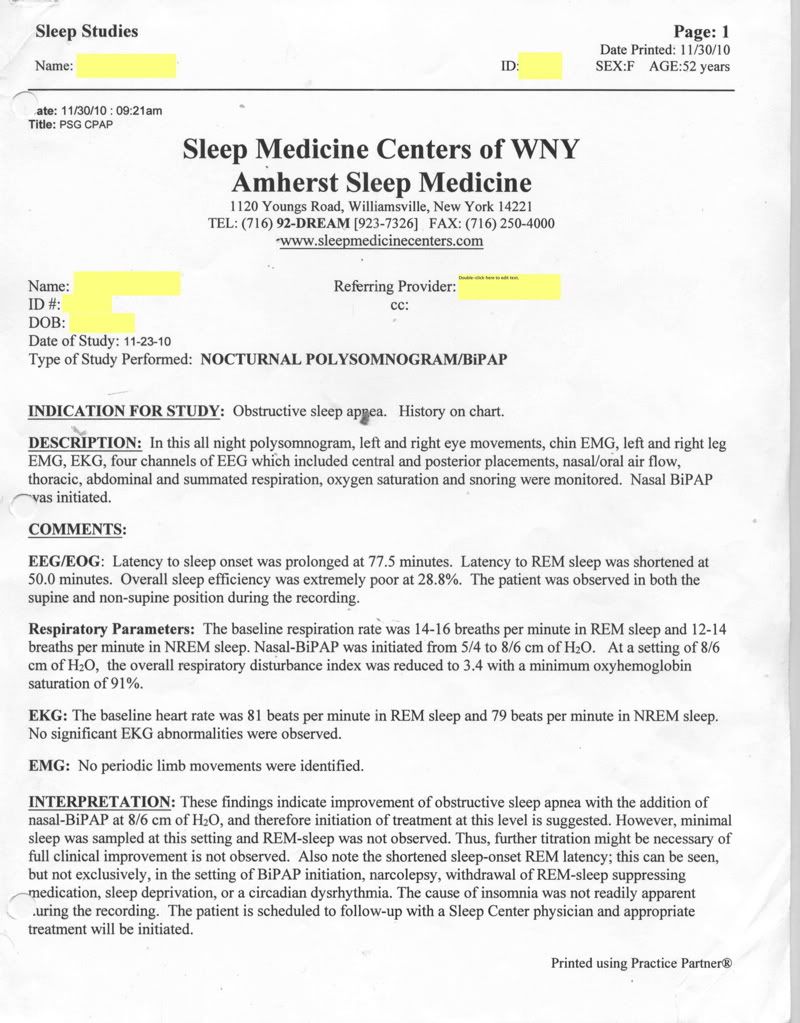
I don't see any saturations below 90% in the Amherst study.avi123 wrote:My first impression:
1) ...
2) Desat O2 down to 70% lots of times (Amherst)