Hello icipher,
I think your first question was well answered by palerider on where the low value came from. As he note, be sure to turn on the device with your finger inserted. I typically wait a few seconds before I start the recording function after turning in on also.
Pulseoximeters do not like a lot of movement - so try this link to understand how they work:
http://www.howequipmentworks.com/physic ... meter.html
It will give you all the technical details on how the device works. As a technical person I find the function interesting, and I also understand that many people will not... so if you don't, just look at the basics of the light shining through the finger... then think of movements of the finger and how the light will change...
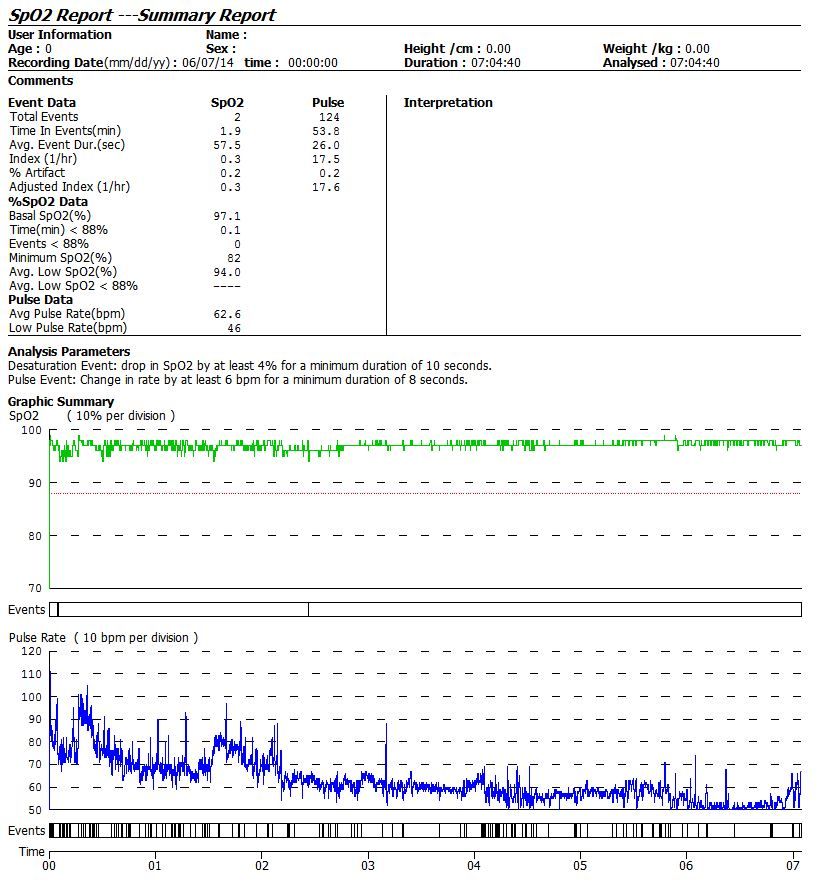
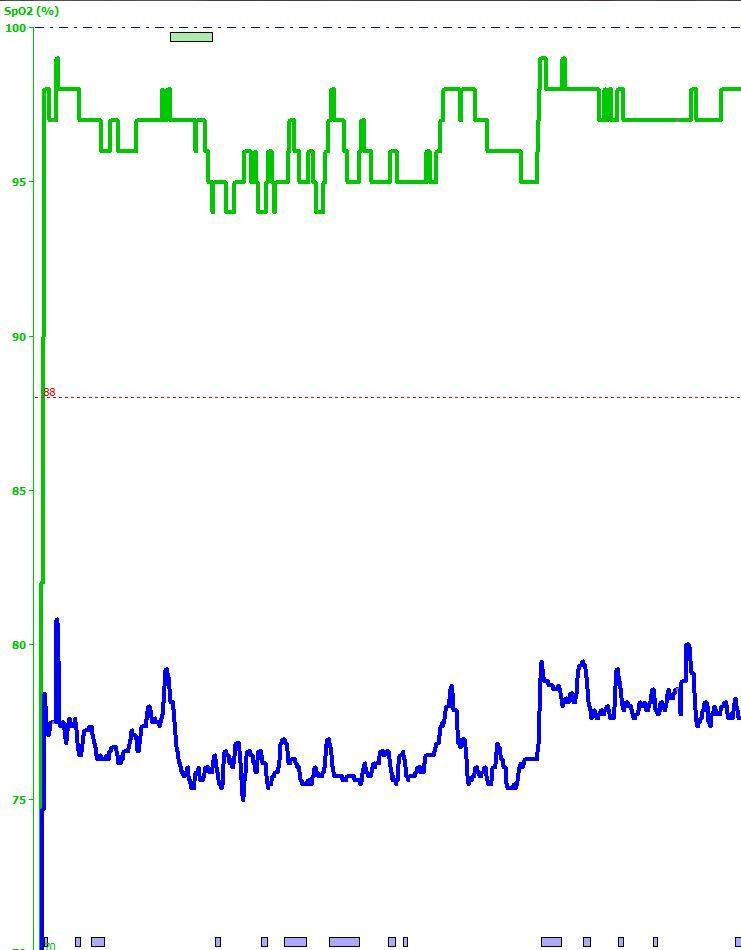
Your second question is on the pulse events. - as the reports says, a pulse event is when your pulse changes by 6 beats per minute (either up or down) from one reading to the next. You said that "I had a lot of awakenings as I was trying to fall asleep." As you look at the pulse graph you can see a higher pulse rate early in the night then getting lower with a few spikes. This is pretty typical in my opinion. A way to relate this to blood pressure - many newer automatic BP devices have a wait time before it takes the first reading. My wife's has a 5 minute rest period before it takes the first reading, then takes 2 more each a minute apart and averages them. So, the wait or rest time is to give the body a few minutes to relax. If you would wait a few minutes after starting the pulse ox before starting the recorder, the pulse rate will start lower. For me, if I waited 5 minutes after the hit the bed to start the recording it would be too late as I would already be sleeping. Keep in mind if you move around a lot at night your pulse rate will also change as your body moves, plus your finger is moving so you many find some changes just from movement of the sensor. Typically movement of the sensor causes changes too. Keep in mind that when you go to bed your pulse is typically higher from the days activities (stress, coffee, etc) and low in the morning. If your machine has data and you use sleepyhead, you can compare the graphs in each device. Then you can look for an event and see if it ties into the rise in pulse or drop in SpO2%.
If you use the "OxiMety Report" it will give you below %SpO2 level time in %. Overall, in my opinion, the graphs are pretty good. I wish my SpO2 was as high as yours