Sleepless in St. Louis wrote:I asked him about the monitoring software and he said that "the technology was not quite there yet relative to the accuracy and dependability of the data that comes off the smart card."
The monitoring software
IS looking at the data that comes off the smart card. Which tells me he doesn't even understand what he's talking about. Which also explains why his answer doesn't even make sense. It's easy to blow off something you don't really understand.
He claimed he was quoting the engineers from the companies that make the machine.
Translation: DON'T QUESTION MY AUTHORITY!
The answer fits the general motif of
blowing smoke.
Ask him their names.
Ask if he could pick them out of a police lineup.
Was it a "SALES" engineer? *cough*
I brought my card in and they could "only generate compliance data".
Another reason to suspect that he doesn't even know the first thing about the software.
My question to him was "how do I know how effective my treatment is". And he said...
"It should match up to your sleep study titration"
Good general answer.
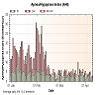
He went on to show me my data from the sleep study, which looked really good once I was on the CPAP. So peeps, how reliable is the data and the analysis that I've seen with the graphs etc.
Chances are the sleep study, the data card, the monitoring software, AND your subjective experience all agree that you are better off WITH the CPAP than you were without it.
A sleep study with 83 wires plugged into the coaxial socket on the back of your head will be more accurate and have waaaaay more data points than the data that is recorded on the data card.
On the other hand, the sleep study has a major disadvantage in that it only looks at your condition on a given night, under less-than-normal conditions. The card and the software track your breathing patterns continuously. And if you have an APAP, the machine is able to adapt and adjust to the variations in your breathing and what kind of a night you're having, something that straight CPAP is unable to do.
why would he discourage me from buying the software and monitoring my own progress.
In the olden days, it was known as a gee-oh-dee complex, rampant amonst old-school doctors. Still exists. It can get really messy when patients become knowledgeable about their own condition. <sarcasm>
He said some other things about APAP and Bi-Pap that go against much of the info I've read on this board.
Your doctor doesn't understand the card and the software, and probably doesn't understand these newfangled APAP / BiPAP gadgets, and the whiz-bangery graphical software that goes with it. (Does he have a cell phone?). It's hard to think of situations where an APAP would actually do a
worse job of it, clinically. It's a little more expensive, and the profit margins are often actually less due to insurance restrictions. That may explain PART of their negativity.
I think these people are helping me as I am beginning to feel better day by day.
I'm glad you are tapped into "the system", and that you are getting help for your apnea. You deserve the best.
I just don't get why they are discouraging me from becoming more proactive with my treatment. It's not like I'm going to be going back to them every month to milk the cash cow. He said I'm pretty much done with them unless I have problems or don't get the improvement I'm looking for.
Ignore the negativity, YOU ARE IN CHARGE. Notice which way the $$$ flows. You are the boss, they work for YOU! And if they MUST know, advise them that you will be monitoring your situation on a daily basis and making adjustments accordingly. I would suggest get a copy of your CPAP prescription (while they can still find it) and keep it in a safe place.
Opinions?
I should mention that your doctor does otherwise seem like a really nice fellow, and I surmise that he truly wants you to have the best treatement and results for your condition. No reason to doubt that.
He who dies with the most masks wins.






 .
.