I Got That...
Posted: Sat Nov 10, 2007 2:06 pm
Oooh, I got a good shot of oscillations (not those specifically), post it when I get back.... kid thing...
SAG
SAG
OK great, I got an extra rake.ozij wrote:Ah, but our trees don't drop their leaves for winter the way yours do...
Y'know, when you blow those areas up, that's the only thing that would seem to make sense.ozij wrote:So, a "double tick apnea" is one which is central, but part of the time the machine is loosing the heartbeat and that's why it's adding the top tick?
Aha! Almost came to the Dark Side of "Not! Not! Not!"rested gal wrote:I've kept forgetting (for two years now!) to ask about something:StillAnotherGuest wrote:It's only 100% accurate (in a small study) in saying that the centrals it does find are centrals.
If the 420E is 100% accurate that when it says it saw a central, it really was a central, how come there was this...
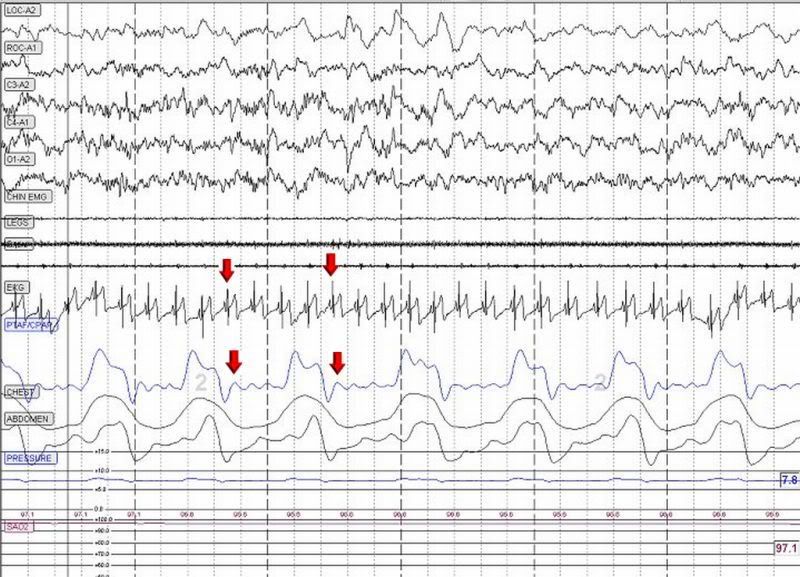
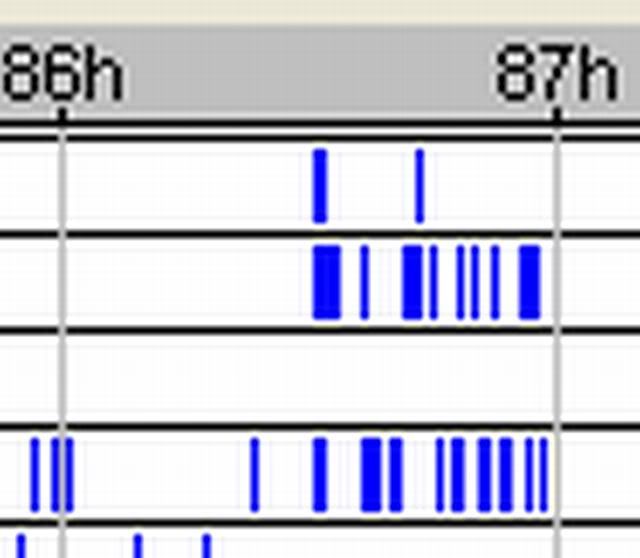
I don't think I fit that bill, cuz that number of centrals happened only on that one night. Not before. Not after.What it would take would be a patient with a fairly pronounced cardiac pulsation that would be sensed by 420E regardless of the airway state (including an obstructed airway). And you might just fit the bill.
is there normally a pause between say an obstructive apnea and a post-arousal central?StillAnotherGuest wrote: On the other hand, trying to explain that simultaneous obstructive apnea/central apnea/hypopnea might be a little difficult.
That's what I'm questioning..that 100% accuracy of the 420E in being correct - always correct - when it says "Now, THAT's a central apnea." I always thought the 420E would be right about that. Now I wonder.Snoredog wrote:My understanding is the 420e only scores CA's on line 2 when it hears cardiac oscillations associated with an open airway. So for the CA's found on line 2, it hears cardiac oscillations associated and is 100% accurate in those detections.
to be honest, I really don't know where that "100% accuracy" claim even came from?, was it from some study? I know the help screen/manual includes info from some study (from memory, brain fade here) that only 60% of central apnea has an open airway present, the other 40% may be closed.rested gal wrote:That's what I'm questioning..that 100% accuracy of the 420E in being correct - always correct - when it says "Now, THAT's a central apnea." I always thought the 420E would be right about that. Now I wonder.Snoredog wrote:My understanding is the 420e only scores CA's on line 2 when it hears cardiac oscillations associated with an open airway. So for the CA's found on line 2, it hears cardiac oscillations associated and is 100% accurate in those detections.
At the same time the 420E was chalking up those centrals for me, the PSG equipment was saying "centrals = zero."
That makes sense to me - the detailed record presentation is a "60 second sampling condensed display of signals and events detected" (according to the manual, Revision E page 32). So any events occuring within one minute will look simultaneous, even if they aren't.Snoredog wrote:is there normally a pause between say an obstructive apnea and a post-arousal central?StillAnotherGuest wrote: On the other hand, trying to explain that simultaneous obstructive apnea/central apnea/hypopnea might be a little difficult.
For example; patient starts off with a hypopnea (10 sec, >50% flow), develops into a full apnea (>10sec, 0% flow) then is followed by a post-arousal central,
would that not produce the vertically aligned events you zoomed in on above?
I really don't know the duration of a "tic" on a 420e or time it represents, I would assume it is 10 seconds?
Since...
Flow limitation is reduction in air flow of <50% flow lasting 10 seconds or longer,
Hypopnea is reduction in flow of >50% lasting 10 seconds or longer in duration
Apnea is occluded or no flow.
My understanding is the 420e only scores CA's on line 2 when it hears cardiac oscillations associated with an open airway. So for the CA's found on line 2, it hears cardiac oscillations associated and is 100% accurate in those detections.
Me too.rested gal wrote:That's what I'm questioning..that 100% accuracy of the 420E in being correct - always correct - when it says "Now, THAT's a central apnea." I always thought the 420E would be right about that. Now I wonder.
Methods: We examined 648 apneas in 52 patients undergoing nocturnal polysomnograms and CPAP titrations. Airflow was measured using the output of the CPAP generator, and apneas were identified from reduction of airflow to < 10% for > 10 s. We used only the presence or complete absence of thoracoabdominal motion to classify apneas: obstructive apnea when motion was present (297 apneas); and central apnea if motion was totally absent (351 apneas). Central apneas most often occurred at sleep onset or followed arousal with a big breath. Using only the flow signal, all apneas were examined for the presence of cardiogenic oscillation by an observer blinded to other signals and apnea types.
Results: No obstructive apnea showed definite cardiogenic oscillations. In four cases, there was a suggestion of oscillation that was not regular enough to be called cardiac. Sixty percent of central apneas showed clear, regular oscillations at cardiac frequency. Cardiogenic oscillations also were seen intermittently during quiet exhalation in apnea-free periods.
I don't know what study it was from either. Here's what -SWS quoted from, I think, a 418 manual:Snoredog wrote:to be honest, I really don't know where that "100% accuracy" claim even came from?, was it from some study? I know the help screen/manual includes info from some study (from memory, brain fade here) that only 60% of central apnea has an open airway present, the other 40% may be closed.
I think you are right, I also thought we had a similar discussion on this topic before then (on another board) years ago along the same lines with Ted, Perry & SWS.rested gal wrote:I don't know what study it was from either. Here's what -SWS quoted from, I think, a 418 manual:Snoredog wrote:to be honest, I really don't know where that "100% accuracy" claim even came from?, was it from some study? I know the help screen/manual includes info from some study (from memory, brain fade here) that only 60% of central apnea has an open airway present, the other 40% may be closed.
viewtopic.php?t=754
Lets put it differenly: what was it about your machine that had it picking up cardiac oscillation, without picking up the accompanying "quiet exhalations" that seem to have been picked up in PSG ?rested gal wrote:I don't know what study it was from either. Here's what -SWS quoted from, I think, a 418 manual:Snoredog wrote:to be honest, I really don't know where that "100% accuracy" claim even came from?, was it from some study? I know the help screen/manual includes info from some study (from memory, brain fade here) that only 60% of central apnea has an open airway present, the other 40% may be closed.
viewtopic.php?t=754
As I understand it:
62% sensitivity means...38% of centrals will go by unnoticed by the 420E. It will notice 62% of them, but will miss seeing a lot of them.
Of the 62% centrals it does notice, it will be correct 100% of the time in calling those "centrals."
But...there's that PSG night....
I still think the sensor tube in the 420E's air hose was inadvertently kinked or pinched or somethin'. That number of centrals hasn't shown up for me before or since.
IFL1 was off, and IFL2 was on -- both set as usual.ozij wrote:Oh. What was you IFL1 and 2 set on for that night?
O.