Re: Suggestions for lowering CA's and Leaks
Posted: Sun Nov 20, 2016 5:18 pm
A Forum For All Things CPAP
https://www.cpaptalk.com/
If all Resmed masks have approximately the same vent amounts, then there's no need for the machine to be "smart" to figure out the leak calculation without being told the mask type. In other words, if a Resmed nasal pillows mask, a nasal mask, and a FF mask all have an unintentional leak rate of approximately 33 L/min at 10 cm and you're using 10 cm of pressure and the total leak rate is actually 43 L/min, the machine doesn't need to know the mask type to figure out that the unintentional leak rate is approximately 10 L/min regardless of the mask used.palerider wrote:I know.... and I have seen that.... I still feel that the whole "used in leak calculations" was for older generations of machines that weren't as smart as the s9-a10 machines are.Pugsy wrote:I know. That's why I said "mainly" and I am just going by what ResMed has always put in their literature about mask selection and leak calculations. I figure if they made a point to say it then it must have some impact or else they would do like Respironics does and make a WAG. ResMed mentions mask selection and leak calculations in the same breath...wasn't me.palerider wrote:
this is one spot where pugsy and I disagree, since *all resmed masks* have approximately the same vent amounts.
You've read it too. Now do they have some other underlying thing going on????? they very well could and I am not saying you are wrong...I am just relaying what ResMed has said in the manuals.
My point about getting the leaks under control first is that the leaks are bad enough to potentially be messing up the data. The AHI may be even worse that it appears to be. Also, getting the leaks fixed is critically important for comfort. The wife might not be sleeping very well to begin with because of the leaks. Fixing the leaks may reduce the amount of sleep-wake-junk, and the CAs might just disappear when the potential problem with SWJ is addressed.palerider wrote:I would agree with you, except for a few points:robysue wrote:The bigger problem right now is the number of CAs: The CAI = 19.4 while the OAI + HI = 10.4. So she's having almost twice as many CAs as obstructive events.palerider wrote:lower pressure would make the already too high obstructive apneas worse... bad idea.raisedfist wrote:If her fixed pressure was 7 before , why not try 6 - 10 auto and see what kind of results she gets?.
And it's worth seeing if a small reduction in min pressure combined with a reasonable max pressure might work better than the current range of 7-20, particularly since the titrated pressure was only 7cm.
In addition a much smaller pressure range may make a big difference in fighting the leaks.
- there is no correlation between the pressure and leaks, at the point where the pressure was at its highest, the leak rate was acceptable, when pressure started coming down, there was a LL, but not certainly not the worst one.
- there is no correlation between periods of central apnea and pressure, highest pressure, few centrals, 7cm pressure cluster of centrals.
We will have to agree to disagree here: My impression is that real CAs are just as stressful as real OAs. And in this kind of picture, we just don't know if the CAs are real or not. But there are enough of them to warrant caution: If the CAs are real, increasing the pressure may very well make things worse, not better.perhaps I'm wrong but it seems that centrals are less stressful than obstructives, though one would have to examine the waveform to see whether breathing resumes gradually or with gasping after the centrals.
Leaks and CAs are two INDEPENDENT problems in my view. And both need to be addressed independently of each other.if there was any correlation between pressure and centrals or leaks, then I'd agree with you, but I don't see any correlation in that one chart.
This IS a good question. And it needs to be asked and answered before anybody lightly makes an automatic recommendation to increase the pressure in my opinion. So thank you for asking it Palerider since I forgot to.a more important question is whether or not the OPs wife has been screened for heart disease, kidney disease, or other underlying neurological causes.
don't all reputable mad scientists?TRzzz wrote: I mean, who am I supposed to experiment on? Myself?
the same thing that humidifier presence, tubing size and length, antibacterial presence is used for. getting more accurate pressure delivery at the mask/person interface.robysue wrote:So why have the mask setting in the first place? If the mask setting is not used for leak calculations, then what *is* it used for?
I don't believe I ever implied that the leaks shouldn't be addressed.robysue wrote:Leaks and CAs are two INDEPENDENT problems in my view. And both need to be addressed independently of each other.if there was any correlation between pressure and centrals or leaks, then I'd agree with you, but I don't see any correlation in that one chart.
Fix the leaks, and comfort goes up and the data is more accurate. With more accurate data and less potential for SWJ, it is easier to evaluate whether more pressure is indeed warranted or whether the CAs have enough chance of being real that they need to be addressed, possibly with a different machine.
Limiting the max pressure may help fix the leaks simply because it means there's less overall variation in pressure to deal with.
if her CAs seemed to be related to pressure, I'd agree with you... but the limited data does not support that hypothesis. she has CAs at all pressures, including 7 and we all know how accurate original titrations often turn out to be.robysue wrote:Independently, limiting the max may help address the CA problem if they're related to pressure. The OP's wife was originally titrated at 7cm and most or all of the CAs happen at pressures that appear to be above 10cm. So it's possible that the OP's wife is someone who is very sensitive to xPAP pressure and too much pressure may indeed lead to more CAs in her case.
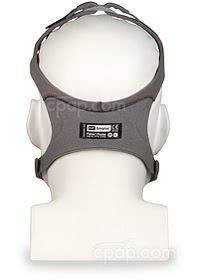
There's no kidney or heart disease going on, but a neurological component is a possibility. Part of the mask leak issue may relate to her hair being tied with a hair band behind her head to keep it from looking wild when she gets up, but this big pile of hair may not be playing nice with the Simplus's "ErgoFormâ„¢ Headgear". I will hazard a guess that women might have this problem more often than men.robysue wrote:palerider wrote:robysue wrote: [snip]This IS a good question. And it needs to be asked and answered before anybody lightly makes an automatic recommendation to increase the pressure in my opinion. So thank you for asking it Palerider since I forgot to.a more important question is whether or not the OPs wife has been screened for heart disease, kidney disease, or other underlying neurological causes.
I still think the possibility that those CAs scored by the machine might be real is an important point to consider.TRzzz wrote: There's no kidney or heart disease going on, but a neurological component is a possibility.
Does the headgear look like this from the back?Part of the mask leak issue may relate to her hair being tied with a hair band behind her head to keep it from looking wild when she gets up, but this big pile of hair may not be playing nice with the Simplus's "ErgoFormâ„¢ Headgear". I will hazard a guess that women might have this problem more often than men.

they certainly help quieten mask leaks... but a cloth seal can't be quite as good as a good silicone to skin seal... but they do feel better, and make leaks little 'pffftsss' instead of "SQUEEEEEEEEALS".robysue wrote: Mask liners usually help with mask leaks.
or have OP sit up and watch, and see if he can figure out where the big problems come from, mouth dropping out of mask? mask being pushed aside by pillow, etc.robysue wrote:..your wife might want to reexamine how she fits the mask each night. She ought to be adjusting the straps only after lying down in her normal sleep position with the machine on at her full minimum pressure. She might also want to wiggle her jaw a bit to see how good of a seal she has before she goes to sleep for the night.
Qualifying word is good. Because if the skin is oily the liner can help to stabilize the silicone and decrease sliding with position changes or face relaxation.palerider wrote: but a cloth seal can't be quite as good as a good silicone to skin seal
Good question. Yes, she puts the bulk of the hair between the upper and lower straps.robysue wrote:Does the headgear look like this from the back?
If so, the pony tail should be put between the upper and lower straps. If she does that, the big pile of hair should not be an issue in terms of mask leaks
Ok, I just dug out the manometer, and hoses and hooked it all up.robysue wrote:So why have the mask setting in the first place? If the mask setting is not used for leak calculations, then what *is* it used for?